
Clagstone Country EstatesContact

Connectivity · CIS

Community Internet Service.
The neighborhood's own ISP.

Multi-gigabit service on day one, delivered over a licensed high-speed microwave link into the neighborhood's shared core. Fiber follows in the same trench as the roads, arriving as a second redundant path. Both owned by the neighborhood. Neither run by a distant phone company.

CIS stands for Community Internet Service. It also stands for Clagstone Internet Service. Both readings are correct, and we decided that was a coincidence worth keeping.

Why it matters here

Athol at 0.3%. We didn't wait.

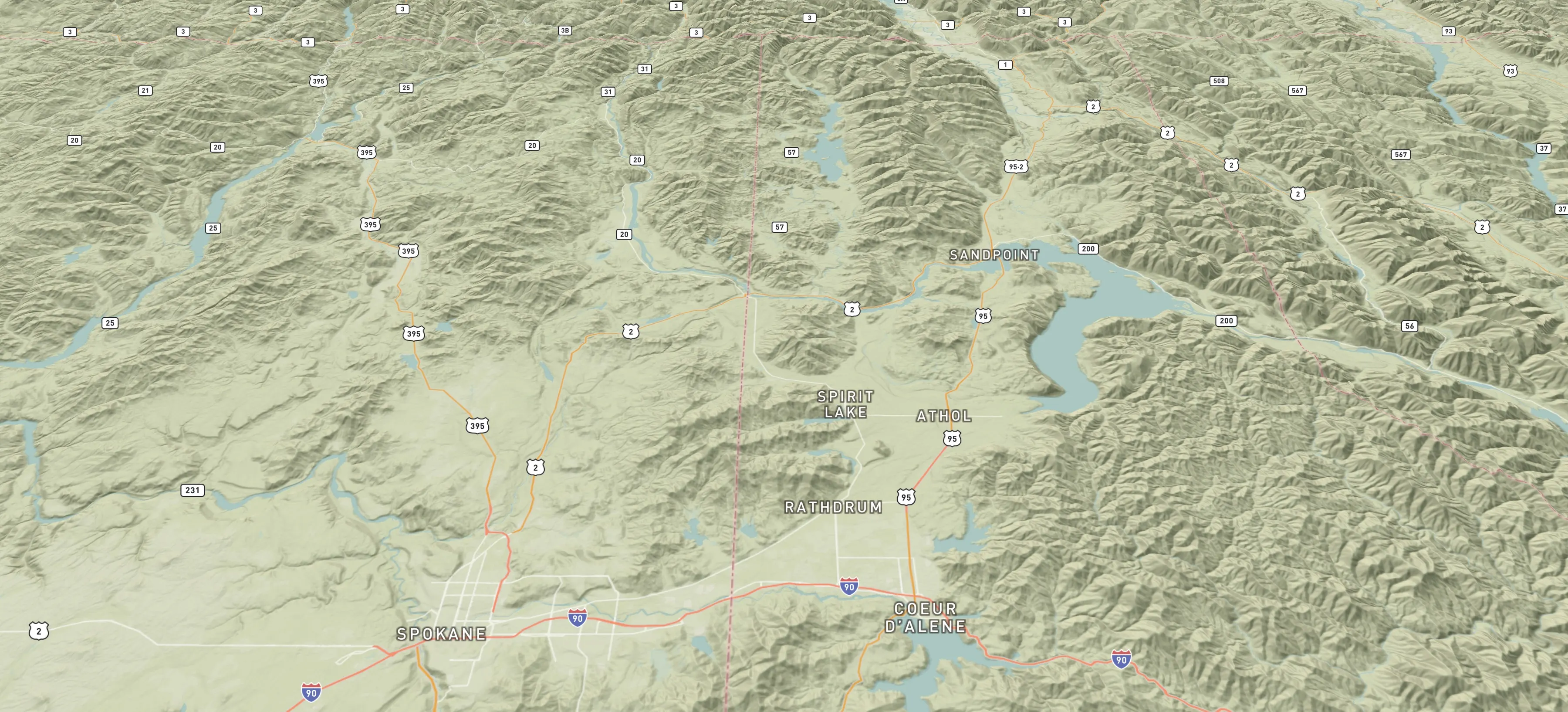
Real fiber to a home along Highway 54 is uncommon enough that the number rounds to zero. Cable covers around a fifth of the corridor, DSL another quarter, and the rest of the pocket runs on satellite. Meanwhile, the fiber backbone that serves the cities of Kootenai County is a short crew day of trench away.

Waiting for a phone company to close that last mile is how rural communities have gotten worse service for thirty years. We built our own instead.

Athol corridor fiber
~0.3%
Kootenai County fiber
~95%
CIS transport
Microwave + fiber
Homes served
All 58

The primary path

High-speed licensed microwave.
Actually faster than fiber.

A licensed point-to-point microwave link connects the CIS core to the nearest carrier fiber ingress. Carrier-class radios at both ends, multi-gigabit full-duplex throughput, adaptive modulation that stays online through weather. The link went up before the fiber trench closed, and it's what carries every packet from the neighborhood to the internet today.

A quietly interesting fact about microwave, and the reason we're not embarrassed to lead with it: over the same route, a well-engineered microwave link carries data faster than fiber does. Light travels roughly thirty percent slower through glass than through air. Between two points at any real distance, the microwave path wins on latency. High-frequency trading firms have paid to build microwave links between the New York and Chicago exchanges for exactly this reason, because milliseconds are money.

For most of what a homeowner does with the internet, the latency difference is invisible. What matters is that CIS launched with a real transport path, not a promise, and it happens to be built out of the same physics that big finance pays extra to use.

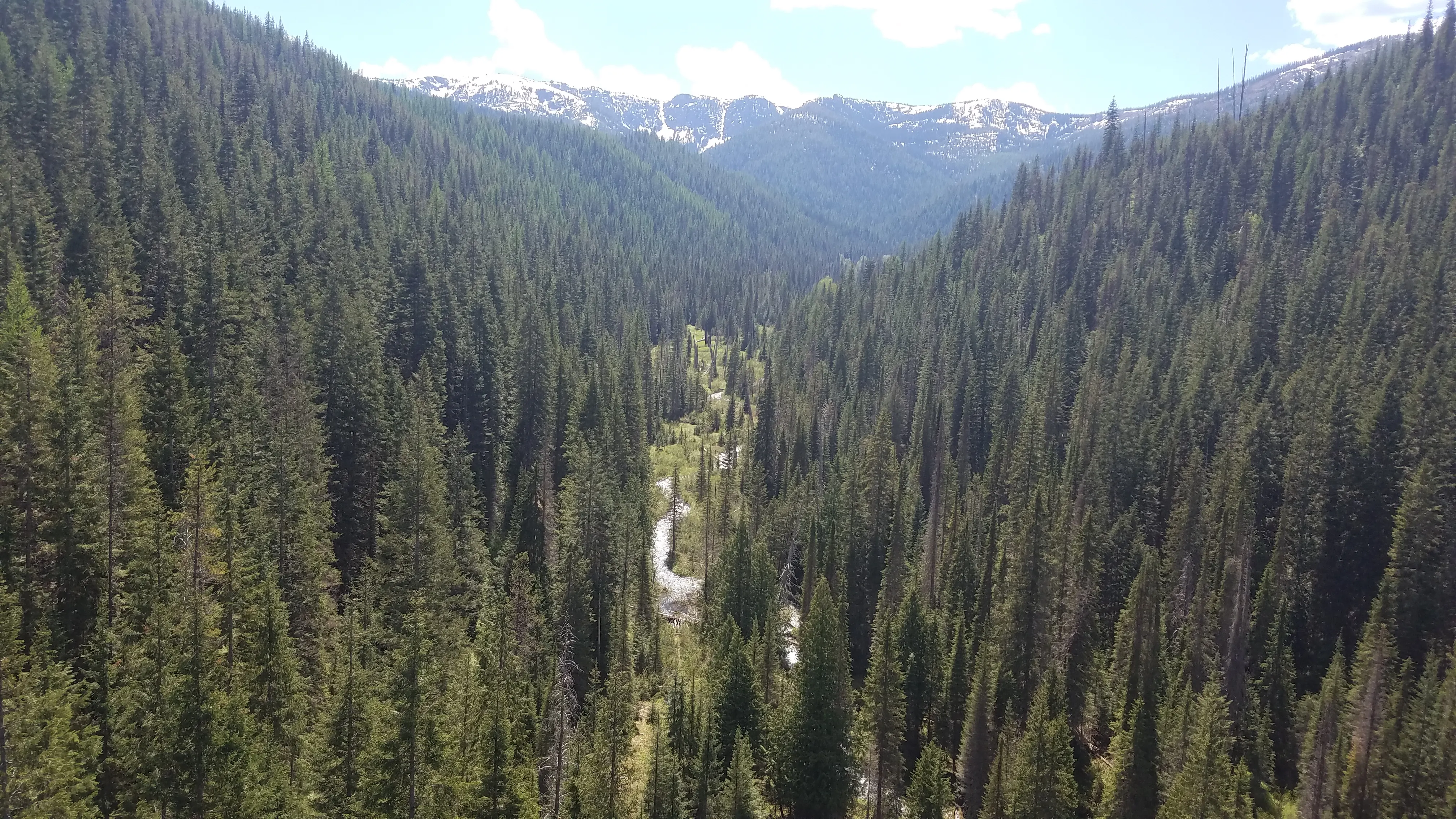
Little Guard Lookout on a ridge in the Idaho Panhandle National Forests, American flag visible at the tower base. Illustrative of the ridge line-of-sight geometry a licensed microwave link uses.
An Idaho Panhandle ridge tower. The same line-of-sight geometry the microwave link relies on, the reason ridges up here are quietly ideal for it. Photo courtesy US Forest Service.

The second path

Fiber in the trench, lighting up as it closes.

With the microwave path live, we still put fiber in the trench. Same civil crew, same open ground, no reason to leave it for a retrofit that would cost ten times as much. Conduit and fiber run to every one of the fifty-eight parcels, ring topology, dedicated pair per lot, and a shared core sized for the fiber-side handoff as Ziply Fiber's Bayview build reaches its final crossings twelve minutes from our entrance.

When each segment of the fiber path lights up, CIS shifts its primary transport to fiber and the microwave becomes an always-on backup. Two physically independent paths to the internet, neither dependent on the other, both terminating in the neighborhood's own core. The kind of redundancy a data center architect would recognize, sitting quietly under a residential subdivision.

A spliceable ring.

The trunk is a fiber ring on physically diverse paths. Two ways back to the core from every vault, so one backhoe can't dark the far end. Houses come online by splitting the ring at their vault, splicing in the drop, and closing it back up. Everyone else keeps serving through the work.
A dedicated pair per lot.

One high-count single-mode cable pulled once, roughly two hundred and eighty-eight strands. Every lot gets its own dedicated home-run pair back to the core, no sharing, no contention. Plus generous spares in the same pull for future services and the dark-fiber options below.

A clean demarcation.

A per-property vault at each frontage. The developer's responsibility ends at the vault; the owner handles the lateral to whichever building they choose to terminate on. Same model as every other utility, no digging on sold lots by the developer, no easement headaches inside the parcel.

A GIS record for the next hundred years.

Every vault, every conduit run, every splice point mapped on the plat and marked with locatable trace wire. Ten years from now, when somebody wants to add a second service or run a diverse path, the plant is findable, not archaeology.

What CIS delivers

The service the county doesn't have anywhere else.

  • Symmetrical multi-gig service.Multi-gigabit up and down. Actual upload speeds that don't fall off a cliff. No data caps, no throttling, no fine print about typical use.
  • BGP peering and CIS's own IP space.The neighborhood is its own on-ramp to the internet: a portable IPv4 block, an IPv6 allocation, and multi-homing across the microwave and fiber paths for real path-diverse redundancy.
  • Dark fiber between lots, on request.The glass is in the ground. Neighbors who want to link garages directly, share backups, or run a private low-latency link between properties can, on a simple splice. Nothing like this exists at neighborhood scale.
  • Local service, local support.CIS is run by the neighborhood, for the neighborhood. When something breaks, the person who fixes it lives close enough to drive over. No offshore call center, no two-hour hold queue, no chat bot.

Ownership

Buy the land.
Become part of the ISP.

CIS is neighborhood-owned. Every lot comes with a membership stake, the same coop pattern that Northern Lights has used to keep rural power local for a hundred years. The neighborhood decides the upgrade cycle. The neighborhood keeps the surplus. The neighborhood chooses its upstreams.

No captive carrier. No mandatory-ISP language in the covenants. If a resident wants to bring in a different provider over the same conduit, the pathway is available. The default that comes with the lot is CIS, and the reason to switch away from your own neighborhood's ISP is a short list.

The whole idea

Two paths in.
A core the neighborhood owns.
Built once, for a hundred years.

The rest of Clagstone is built to a hundred-year standard. The roads. The plat. The covenants. The way six acres is the measure of the lots. It was strange to us that the network would be the one thing we'd let a phone company think about for thirty years. So we didn't. It went in the same trench as everything else that's meant to last, and the microwave that carries it today keeps carrying it when the wire under the ground has its bad day.

For the ones who read spec sheets

The full network design is public: the two-mile fiber ring, the 72-fiber trunk each phase pulls, the vault at every lot line, and the dark-fiber option no other neighborhood offers.

Read the network design →

The other half of the trench

The trench also carries three-phase power to every homesite, the piece most rural subdivisions leave off the table.

Read the three-phase story →

What rides the wire

Once the packets arrive, the neighborhood platform takes over: commons Wi-Fi, local-not-cloud cameras, the community datacenter, all of it on software you can read.

See the neighborhood platform →

Come walk the parcel.
See the link on the roof.

The plat is set. The conduit runs alongside the roads. The antenna is up. Come see the lot, the vault at its frontage, and the link that lit it.