Three-phase to every homesite. And why that matters.
Most rural residential subdivisions leave three-phase off the table. Clagstone doesn't. Here's what that means when you plug something in.
What most rural homes get
Split-phase, 240 volts, 200 amps.
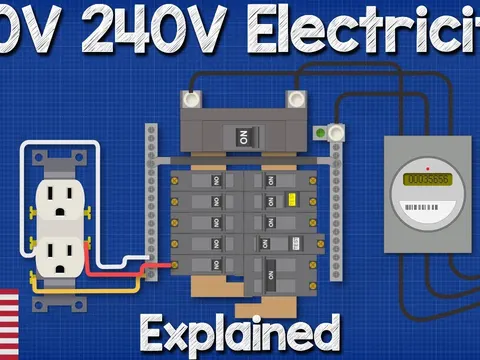
Standard American residential service is a single phase from the utility pole, split by the transformer into two 120-volt legs sharing a neutral. Great for the range and the dryer. Fine for a Level 2 EV charger. Every 240-volt appliance in your kitchen or laundry room lives on that split.
Where split-phase runs out of room is the shop. Any motor built for real industrial duty, the kind of tool that would live inside a commercial building, was designed to run on three-phase. Plug one into a split-phase service and you either de-rate it, replace parts of it, or install a rotary phase converter to fake the third leg. All of those work. None of them are what the tool wanted.
What Clagstone puts at every homesite
All three phases, run to the property line.
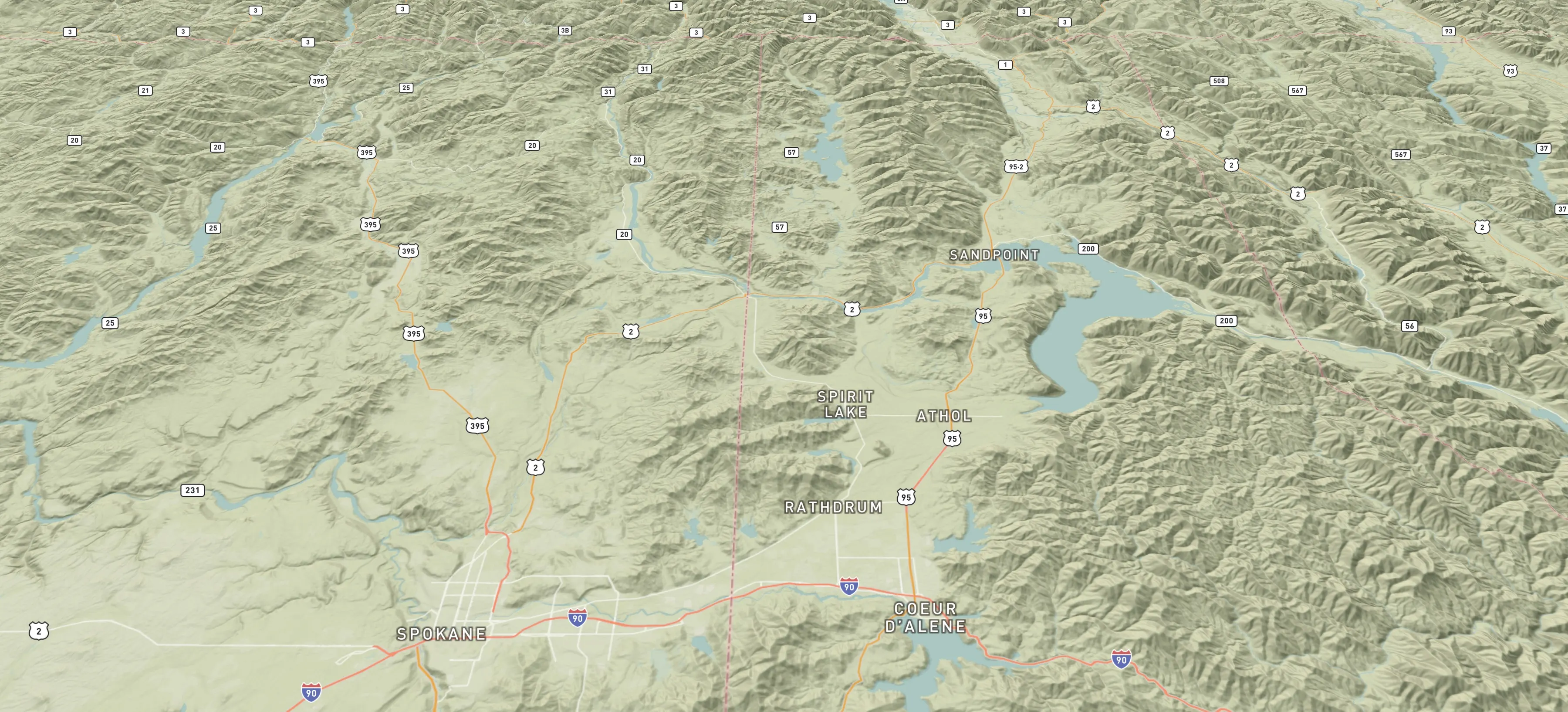
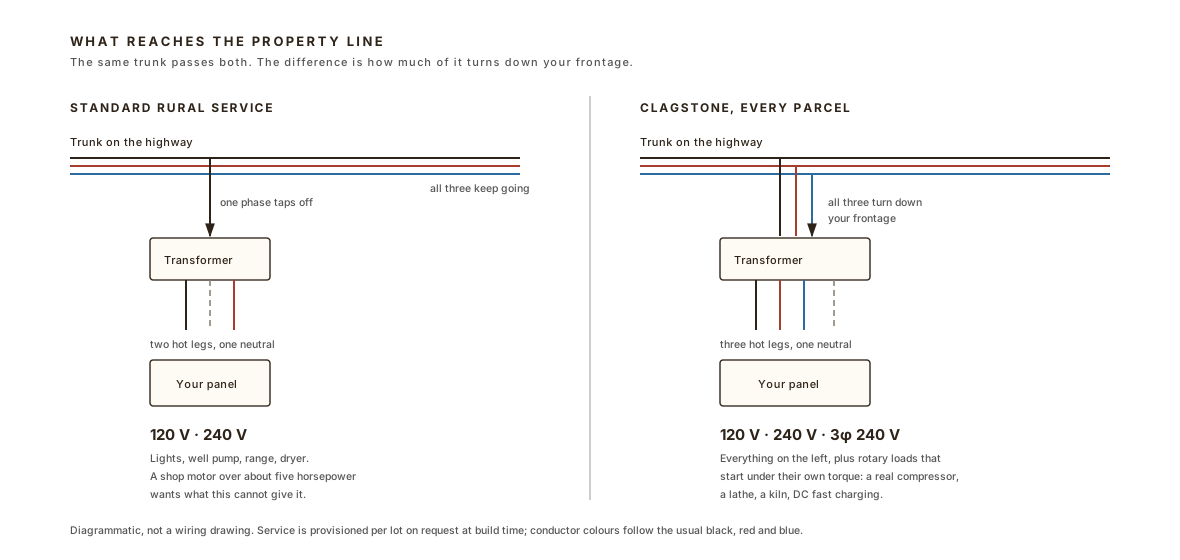
Northern Lights provisions three-phase service to every one of the fifty-eight parcels, available on request when you build. Same coop that serves every home in the corridor, same reliable rural utility, one uncommon extra: all three phases are carried on the trunk to your parcel's frontage instead of stopping at the highway.
Standard rural service is a single phase, split at the transformer into the familiar 120 and 240. The other two phases usually stop at the highway. Coops charge more to string them, and most subdivisions don't ask. Ours does.
The same utility corridor carries natural gas, from Avista, to every parcel frontage. Out here that is nearly as uncommon as the three phases: most rural homesites heat on a propane tank and a delivery schedule. At Clagstone the furnace, the range, and a tankless water heater run on a meter at the frontage instead.
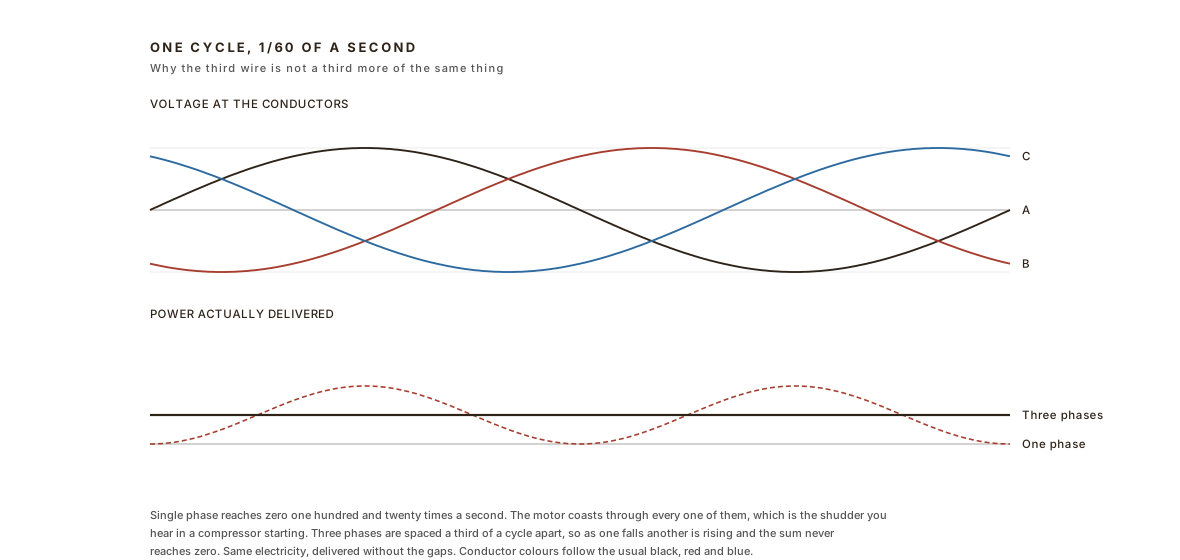
Project: three-phaseSubject: one cycleSheet: 1 of 2By: the neighborhood
One phase pauses a hundred and twenty times a second. Three do not.
Project: three-phaseSubject: at the frontageSheet: 2 of 2By: the neighborhood
The same trunk passes both. The difference is what turns down your frontage.
How it gets there
In the ground, not on poles.
Northern Lights' design for the neighborhood runs the service underground, in conduit along the road corridor. Every lot gets a conduit stub and a marker at the frontage, fed in pairs from junction cabinets along the line, and a new recloser at North Clagstone Road protects the whole neighborhood's feed. The same three-phase spine also drives the pumps on the community water system, one backbone doing double duty.
What that buys you is mostly what you will never see. No poles in the viewshed. No line sagging under February ice. When the storm takes down power somewhere on the prairie, it is not taking it down in your driveway.
How three-phase is different
Not more electricity. Smoother electricity.
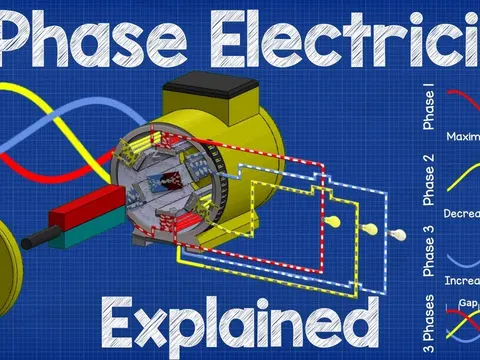
Single-phase power comes in as one waveform, rising and falling sixty times a second, briefly passing through zero twice per cycle. A motor running on it feels a rhythm of push, rest, push, rest. That's why single-phase motors need starting capacitors to get going, and why heavy single-phase equipment hums under load.
Three-phase brings three waveforms offset by one hundred and twenty degrees. At any moment, at least one leg is at power. A three-phase motor sees continuous rotational force. It starts itself. It runs cooler, quieter, and longer, on fewer amps to do the same real work.
Motors that start themselves.No starting capacitors, no clunk when the compressor kicks on, no hard start on the whole panel. The motor eases into rotation because at least one phase is always pushing.
More real horsepower per amp of service.The math on three-phase carries roughly seventy-three percent more usable power in the same conductor size, which lets a shop run a bigger load without upsizing the service or the wire.
Longer motor life.Smooth rotational force means less mechanical stress on bearings, less thermal cycling on windings. Commercial three-phase motors routinely outlive their split-phase counterparts by decades.
No rotary phase converter.Shops that want to run three-phase tools on a residential single-phase service resort to a rotary phase converter, a spinning motor that generates the third leg. Loud, inefficient, one more thing to maintain. Not necessary here.
What three-phase unlocks
Tools designed for real work.
The equipment below all runs natively on three-phase. On split-phase you either can't run it at all, have to buy a down-rated version, or need a phase converter with the cost and losses that come with it.
In the shop.
Industrial welders (Miller Syncrowave, Lincoln Idealarc). Handheld laser welders, the new class of shop tool that ran fifty thousand dollars in 2020 and closer to eight by 2025. Big air compressors, seven and a half horsepower and up. Dust collectors that actually move air. CNC machines, mills, lathes worth keeping. Wood-shop tools sized for a working craftsman, not a hobbyist.
In the studio.
Ceramics and glass kilns that fire on schedule instead of creeping to temperature. Commercial-grade HVAC for a detached studio or shop building. Kitchen equipment sized for catering scale if that's what you do.
In the driveway.
Level 2 EV charging is fine on split-phase. Level 3, the DC fast charging you usually only see at a highway pull-off, needs three-phase input. A twenty-five to fifty kilowatt residential DC unit runs on the ground you buy. Twenty minutes from ten to eighty percent, at home.
On the property.
Well pumps sized for a real irrigation load. Barn ventilation on a working farm. Commercial-scale outbuilding heat. Any motor load that would have felt cramped on residential service has room to spread out here.
Future-proof.
Fiber laser cutters. Industrial three-D printers. Robotic arms in a maker space. The last decade of "shop" tools assumed a small hobbyist's service. The next decade assumes something closer to what a commercial building has. That infrastructure is already in the ground here.
Backup and grid-tie.
Whole-home standby generators, natural gas or propane, run cleaner and larger on three-phase than on split. Battery backup ties in through a grid-tie inverter with clean transitions, no islanding tricks. If peak-shaving your load profile matters later, the option is there without an infrastructure rebuild.
The honest note
Three-phase to the transformer is a utility fact, not a promise.
Northern Lights energizes the service to your lot on their standard commercial-service terms. There's a modest monthly customer charge for a three-phase meter plus per-kilowatt-hour billing on what you actually use, and the coop is the one who quotes the exact number. We're not the utility, and we're not the intermediary.
What Clagstone contributes is the piece that's usually missing: the full three-phase line carried on the trunk to every parcel's frontage, so you don't have to petition the coop to extend a line. If you never pull three-phase loads, you pay for what you use, the same way any coop customer does. The infrastructure is available; whether you use it is on you.
Learn more
For the curious.
Three-phase reads dense on paper and lands quickly on video. If you'd rather see the waveforms move, these three do the job.
External links open in a new tab. Thumbnails are cached on our server so the page loads whether or not you allow YouTube trackers.
The rest of the trench
Multi-gigabit internet runs alongside the power, from a neighborhood-owned ISP, and community water runs the same corridor from the neighborhood's own well.