A platform, not a subdivision. Everything the neighborhood shares, lives at the core.
Public Wi-Fi at the trailhead and the entrance. Cameras that face the commons and log every viewing to every owner. A community datacenter you can rack your own gear in. A neighborhood-owned IoT network that tracks pets and outbuildings without a cellular subscription. Wildlife sensors that put the dawn elk on the community feed. All of it hosted on the neighborhood's own core, running on the neighborhood's own network. None of it in a cloud account belonging to somebody else.
Why it lives at the core
Local, not cloud. Owner-controlled, not opt-out.
Everything a modern neighborhood might want from a technology platform has already been built by somebody. The question is where it runs and who owns it. The usual answer is a cloud account with a phone number for support, terms of service that change on Tuesday, and a business model that treats residents as the product. That was never going to fit here.
The core of Clagstone is a small, well-cooled equipment room alongside the CIS network mast. It runs the neighborhood's services on hardware the neighborhood owns, on power the neighborhood pays the coop for, over a network the neighborhood built. When something needs a decision, the people who make it live inside the plat. That is the whole idea.
Where the data lives
On plat
Who owns the platform
The 58
Default privacy posture
Opt in
Ads and trackers
Zero
The entrance · Tract B
The first hundred feet belong to everybody.
Before the platform, the porch. The entrance off North Clagstone Road is its own shared tract, and it carries the three things a rural neighborhood actually uses every day.
The bus stop
A real school bus stop, drawn on the plans as its own turnout so the bus pulls fully clear of the travel lane. Winter mornings happen at the road with the neighbors, not at the end of a long driveway alone.
The mailboxes
Cluster mailboxes in the same turnout, one covered place a neighbor drives past anyway. Mail and packages land together instead of scattered down four streets of individual posts.
The information center
The entrance kiosk carries the plat, the notices, and the neighborhood's own information, the same structure the public Wi-Fi already covers.
Coverage at the trailhead. Coverage at the entrance. No captive portal, no ads.
Mesh access points cover the shared spaces on the plat. The trailhead into the open space. The entrance kiosk. The shared community structure by the core. Every one of them backhauled over the CIS ring to the same multi-gig transport your house would use. It is the neighborhood's own network, extended outdoors so a walk into the common ground doesn't drop off the map.
No captive portal, no ads, no data collection dressed up as a "free service." Owners join with a device credential once and their phone reconnects on its own from then on. Guests get a simple splash page owned by the neighborhood, a short description of what the network is, and a click-through. That is the entire onboarding.
Outdoor-rated hardware.
Commercial outdoor access points, the same class of gear that runs a small campus. IP-rated for real weather, wide operating temperature for real Idaho winters, and powered from the shared core rather than a nearby house.
Sensible coverage, not blanket.
Access points are placed where a person on foot would want a signal: the trailhead, the entrance, the shared structure at the core. Nobody's cabin gets bathed in Wi-Fi from a neighborhood radio. Coverage stops at the common ground.
A guest network that behaves.
Guest traffic is isolated from resident devices and rate-limited so a visiting delivery driver streaming YouTube can't slow down a neighbor's call. Same physics as any well-run coffee-shop network, sized for the actual load.
On the community network.
The access points are part of CIS. Traffic rides the same transport, egresses through the same peering, and shows up on the same neighborhood-owned IP space. No third-party wireless provider standing between the shared ground and the internet.
Community cameras, local-not-cloud
Cameras cover the commons. Every view is a matter of record.
A small number of cameras cover the shared ground: the entrance, the trailhead, the yard where the water tank and the network mast live. They point at common space, they point away from private property, and they exist for the same reason a well-run neighborhood keeps a light on at a shared driveway.
The feeds live in the neighborhood's own storage at the core. They do not touch a cloud service, they do not touch a subscription, they do not touch a hardware vendor's login page. What sets Clagstone apart from every commercial camera product is the second half of the sentence, and it is load-bearing: every viewing is logged, and the log is visible to every owner. If someone pulls up the entrance feed at two in the morning, every neighbor can see who pulled it up and when. Surveillance, turned inside out into transparency.
Common areas only.Every community camera is aimed at ground the neighborhood shares. None are aimed into a private parcel, ever. The angles are documented, the field-of-view drawings live in the plat, and the placements are owner-approved before a single mount goes up.
The view log is public to owners.Access to a feed writes a line to a public record: who opened it, when, and for how long. Owners can read the log at any time. This is the mechanism that keeps a shared camera from becoming a private one. Nobody has to trust anybody; the ledger is right there.
Owner cameras stay private.Cameras a resident installs on their own property are theirs, by default and forever. The neighborhood platform never asks for the feed, never stores the feed, never indexes the feed. An owner who wants to share a driveway camera with a specific neighbor can choose to; the default, in every case, is that private footage stays private.
Retention with a sunset.Common-area footage rolls off on a short retention window unless an owner flags a specific clip for a reason and files a note. Recordings are not kept forever, are not trained on, and are not sold. Storage is a shared cost the HOA absorbs, not a subscription that grows a database for somebody else's business model.
The frame Joe uses when neighbors ask about it: a neighborhood watch that watches the watchers. The point is not "who is being seen" but "who is doing the seeing, and can the rest of us see them doing it."
The community datacenter
A colocation facility you can walk to.
The shared core that houses the CIS meet-me is more than a wiring closet. It is a small, properly built colocation facility. Conditioned power on the utility side, battery backup for the minutes it takes a generator to catch, cooling sized for the load, and dark fiber back to every one of the fifty-eight lots. Owners can rack their own gear in it, on a shelf or a full unit, the way any small business would rack in a downtown colo. The difference is that this one sits inside the neighborhood you live in.
The reason it matters, and the reason it is on this page instead of buried in the network story, is what it does for the ownership lifecycle. A lot that has not yet been built on can still be productive. Data, services, and workloads can live at the colo from the day of the closing, three years before the first stud is nailed. When the house comes online, that colo presence becomes the owner's second site, an offsite backup three minutes down the road instead of a distant region owned by a distant vendor.
Redundant power, redundant network.
Utility feed on one bus, battery on the other, generator behind both. On the network side, the two independent CIS transport paths land in the same room. A rack in the colo gets the same reliability envelope the neighborhood's own services run on.
Dark fiber back to the lot.
Every parcel already has a dedicated fiber pair to the core. A rack at the colo is not a remote service; it is a wire from the equipment room to your building, at line rate. The same physical infrastructure that carries the internet carries the loopback to your own house.
Productive from day one of ownership.
A raw lot normally just accrues taxes while you wait. Here, the lot is already working: data at rest at the colo, construction cameras streaming privately back to your own rack, a place to park a build server or a media library or a small home lab, before the framing crew arrives.
A second site, three minutes down the road.
Once the house is up, that same colo presence becomes the owner's offsite backup. Physical separation from the building, on independent power, on the neighborhood's own network. The kind of continuity plan a small business pays real money for, folded into the amenity.
LoRaWAN · the neighborhood's own IoT network
A private, low-power network for the things that don't need Wi-Fi.
A LoRaWAN gateway sits on the network mast at the core and covers the whole plat. LoRaWAN is a low-power, long-range radio protocol built for the sort of device that sends a few bytes every so often and runs for years on a coin cell. Pet trackers. Gate sensors. Mailbox alerts. Soil moisture. Water tank levels. Temperature and smoke in an outbuilding. All of them on the neighborhood's own network, all of them without a monthly cellular subscription.
The network server is self-hosted at the community datacenter, the same room the cameras and the intranet run out of. Nothing touches a cloud dashboard belonging to somebody else. Every device pairs to the neighborhood, every reading lands in the neighborhood, and the owner of the device is the person who decides what to do with it. Same local-not-cloud spirit as the cameras, same privacy spine, same lack of a subscription drip.
Pet trackers with years of battery.A collar tag on the neighborhood's own LoRaWAN network reports position across the whole acreage. No cellular plan, no monthly fee, and battery life measured in years because the radio sips power. When a dog wanders, the network doesn't just guess: it knows where the dog is.
Property sensors that just work.Gate open. Mailbox flag up. Water tank at fifty percent. Freezer in the outbuilding above freezing. Smoke in the barn. All of it a few bytes over LoRa, all of it in a dashboard hosted at the core, none of it running through a manufacturer's app store or a subscription tier.
Aging in place, at property scale.Help pendants and wander alerts that work across the whole acreage, not just within Wi-Fi range of the kitchen. This is a care platform, not a surveillance one. The device is opt-in, the data is owner-controlled, and the people who see it are the people the owner names. Same dignity, longer range.
Every device opt-in, every device local.No sensor is on the network without the owner pairing it. No reading leaves the plat without the owner sharing it. The default posture is a private device on a neighborhood network, not a device on somebody else's platform. If a resident wants to leave, they take the sensor and the data with them.
The commercial version of most of these devices runs a subscription of five to fifteen dollars a month, per device, forever. On the neighborhood's own LoRaWAN, the network is a shared asset. Residents pay for the sensor once.
Wildlife detection, place-sense
Tech that starts the conversation, then gets out of the way.
Small acoustic sensors around the shared ground identify birds by call, the same way a BirdNET-style detector does at a naturalist's field station. When a pileated woodpecker lands down by the open space, the sensor picks up the call and posts the sighting to the neighborhood feed. Three people who might never have spoken end up in a thread about which stand of larch it is likely feeding in. That is the whole point of a place.
A handful of wildlife cameras in the common ground do the same thing with the elk at dawn and the seasonal deer crossings. The footage lives on the neighborhood's storage, the highlight clips post to the community feed, and the pattern of who is moving through the land becomes something the whole neighborhood shares awareness of. Technology as a way to notice, then step back so the noticing happens.
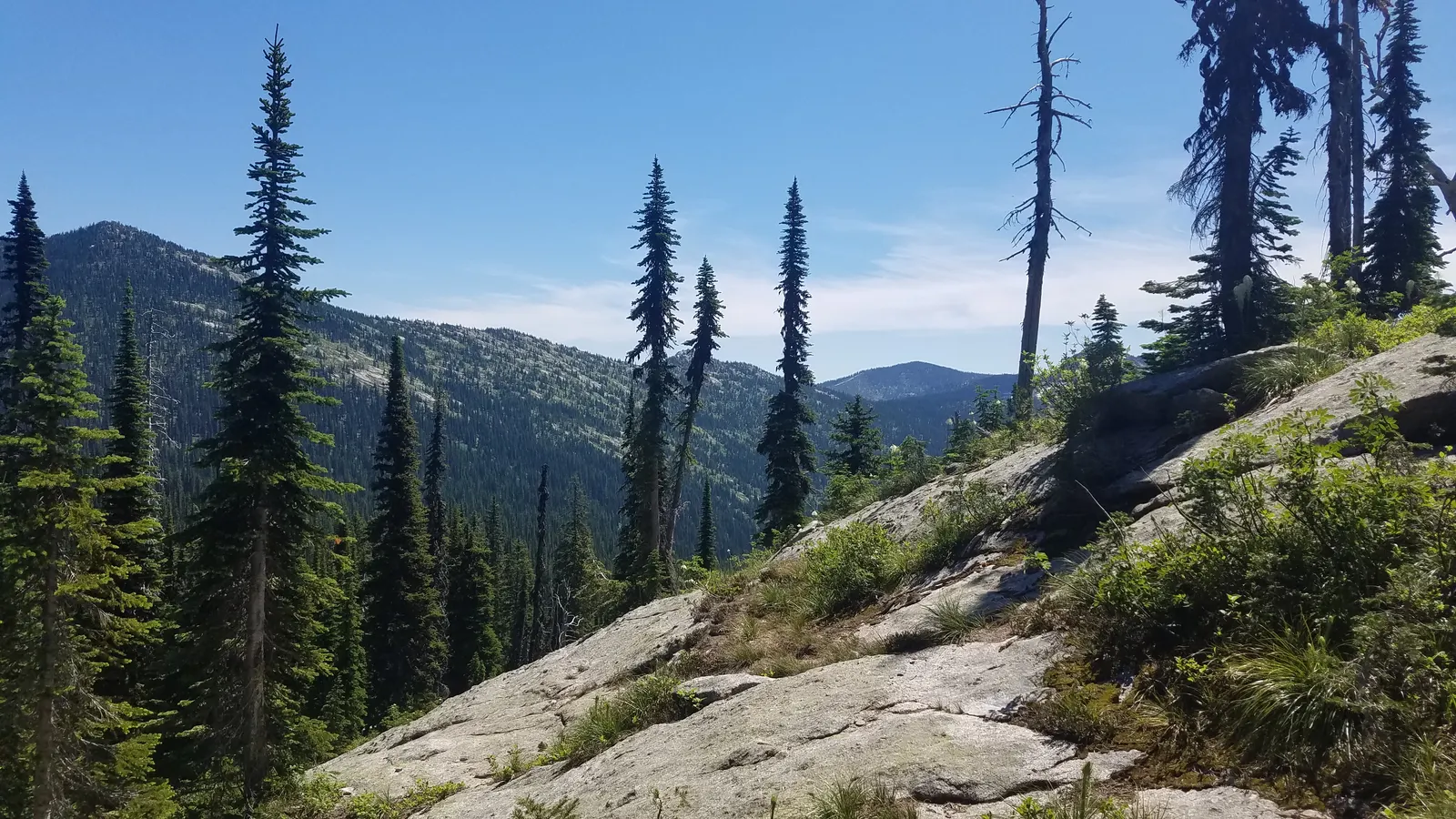
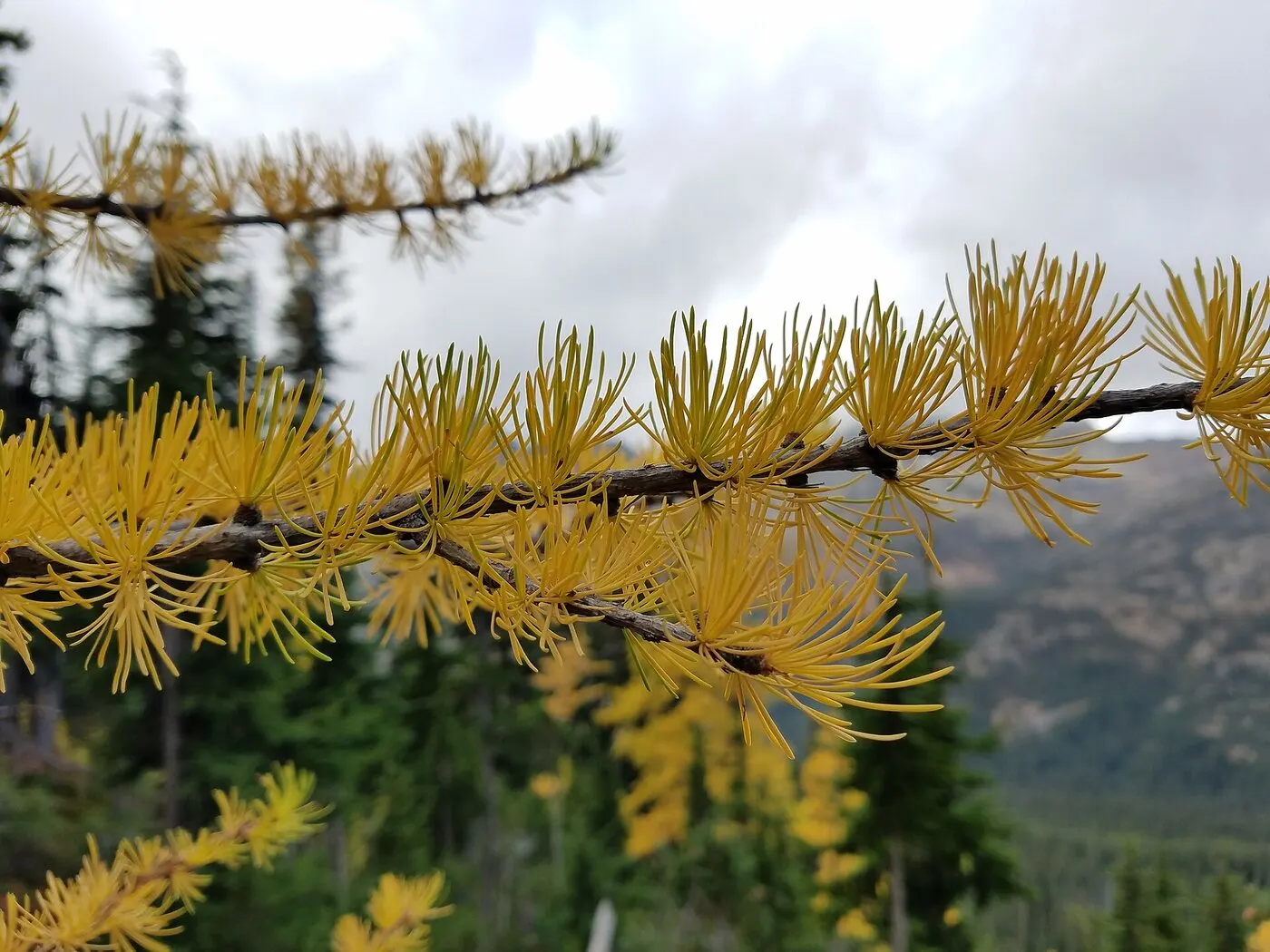
The pileated woodpecker, the one whose call carries across the open space and starts the thread.Western larch, which turns the hillsides gold every October and then drops its needles like nothing happened.
Acoustic detection on the commons.
Small weather-hardened microphones on the shared land, running open-source acoustic identification. Species get posted to the community feed with the recording attached. What the ear almost caught, the sensor confirms.
Wildlife cameras, ambient content.
A few motion-triggered cameras on well-chosen paths. Elk at dawn. The seasonal crossings. The larch turning gold every October, the same view, on repeat, for years. Not marketing. The neighborhood's own quiet show.
A place-sense layer.
Over months, the sensors and the cameras build a picture of what actually lives on and moves through the land. The moose the neighbor mentioned. The seasonal grosbeaks. The cougar that came through the low draw one November. A shared awareness of the place, held by everybody.
Everything on plat.
The recordings live in the neighborhood's own storage. The identifications happen on the neighborhood's own hardware. The community feed is hosted at the core. No cloud service is watching the land on the neighborhood's behalf.
The neighborhood intranet
Ad-free. Self-hosted. A front porch, not a feed.
The board, the calendar, the marketplace, the alerts, and the directory all live on a self-hosted community platform at the core. There is no advertising, no algorithmic feed, no engagement pipeline. Neighbors post about a delivery misdrop, a chainsaw available to lend, a lost dog headed toward the tree line. The rest of the neighborhood sees it because it was posted, not because a ranking model decided to surface it.
The same platform also hosts the useful shared services that make a neighborhood-sized network worth having. A neighbor-to- neighbor backup destination three houses down instead of a distant vendor. A community media library for the shared content that residents have made or contributed. A local Minecraft world the kids run over dark fiber for a summer at LAN-quality latency. Small things, each of them, and together they add up to a neighborhood that owns its own conversations.
The board, the calendar, the marketplace.The everyday tools a neighborhood actually uses, hosted at the core, run by the neighborhood, and never a source of ad revenue for anybody.
Neighbor-to-neighbor backup.An offsite copy of the family photos or the small-business books, hosted three houses down at line rate over dark fiber. No cloud subscription, no egress charges the day you need the data back.
A shared media library.Community content, contributed clips, the wildlife-camera highlights, streamed inside the plat from the core. The files never leave the neighborhood.
A local Minecraft world for the kids.A game server on the neighborhood's own hardware, sub- millisecond to every house over the fiber ring. LAN-quality multiplayer, no matter what the internet is doing.
Open source · the software layer
The neighborhood runs on software you can read.
Everything above makes a promise: local not cloud, opt-in not surveillance, every view logged. A promise like that is only worth what you can verify, and that is why the platform runs on open-source software at every layer. When somebody asks what the entrance camera actually does with a face, the answer is not a privacy policy. The answer is the source code, and anyone who cares to can go read it.
The other reason is the clock this neighborhood is built on. Vendors sunset products, subscriptions ratchet, cloud services get acquired and shut down. A plat planned in hundred-year terms cannot have its cameras bricked by a startup's pivot or its sensors held hostage by a licensing change. Open source is the only software with a hundred-year maintenance story, the same reason the roads are public and the fiber is owned.
The edge runs OPNsense.The neighborhood's routing and firewall run on OPNsense, the open-source firewall platform, at the core. The rules that decide what enters and leaves the plat are configuration any owner can inspect, not firmware from a vendor with its own interests.
The commons Wi-Fi runs OpenWrt.The access points at the trailhead and the entrance run OpenWrt, open-source router firmware, with no cloud controller and no vendor account between a guest and the internet. Public Wi-Fi with no analytics resale is not a marketing claim here. It is a property of the firmware.
The cameras run Frigate. The sensors run open stacks.Camera detection runs on Frigate, an open-source recorder that does its recognizing on the neighborhood's own hardware, so no frame leaves the plat to be analyzed. The acoustic wildlife layer runs BirdNET, from the Cornell Lab of Ornithology. The LoRaWAN network server is ChirpStack, self-hosted at the core. Same pattern at every layer.
The dashboards are readable by every owner.The health of the whole platform, link status, storage, camera-view logs, sensor uptime, is published to owner dashboards hosted at the core. The neighborhood watch that watches the watchers is not a slogan. It is a page any owner can open.
Each mark belongs to its project. The links open the projects' own sites in a new tab.
There is a quieter benefit, too. Software the neighborhood can read is software the neighborhood can fix. The stack invites the tinkerers on the plat to help maintain what they use, the way a barn raising works, and the region has no shortage of people who build things.
The honest note
A platform is only as good as the norms around it.
Owning the platform doesn't get the neighborhood off the hook for governing it. The camera policy has to be written down. The view log has to be readable. The retention window has to be enforced. The LoRaWAN device rules have to sit inside the covenants alongside the fencing rules and the setback rules. That work is not glamorous, and it is the work that keeps the platform pointed at "front porch" instead of drifting the other direction.
The other honest half: none of this replaces good neighboring. A community feed doesn't make people wave from the driveway. A wildlife camera doesn't put anybody on a trail. The tech is there to start the conversation, then step back so the conversation happens. If the conversation doesn't happen, the tech didn't help. Joe's line on it: the front porch was doing most of this work a century before any of us had a network. We just made sure the network doesn't get in the way.
Come see the core. And the mast that carries it.
The shared room is small. The mast is the tall thing at the core. Come walk the parcel, see the trailhead where the Wi-Fi starts, and stand under the antenna that ties the plat to the rest of the world.