Clagstone Country EstatesContact

Water

Community water to every homesite.
And why that is rare out here.

Most rural six-acre lots hand you a drill rig and a hope. Clagstone hands you a tap. A shared well, real mains down every street, fire hydrants on the line, and a service stub waiting at your lot.

What most rural lots get

A drill rig, and the truth afterward.

On ground like this you normally drill your own well. You own the pump, the pressure tank, the maintenance, and the risk, and you find out the depth and the water quality after you have paid for the hole. It works; families have done it for a century. It is also the single biggest unknown on a rural lot, and it lands in your budget at the worst possible time, somewhere between the land closing and the foundation pour.

What Clagstone puts at every homesite

One well, shared. Mains down every street.
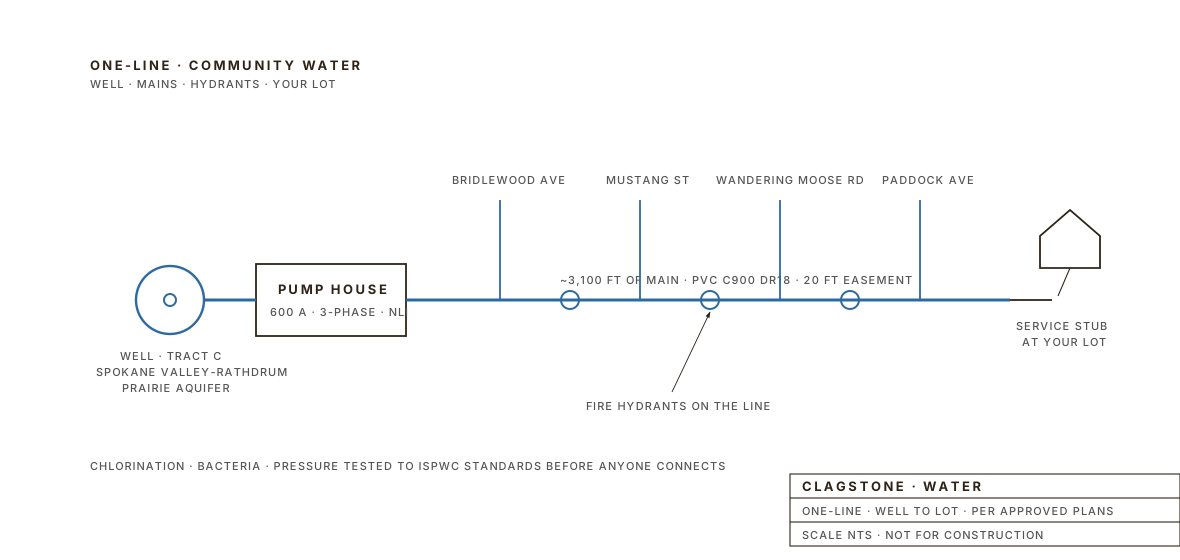
The approved construction plans put a community water system in the ground with the roads. A well on the neighborhood's own tract, Tract C, serves all fifty-eight homesites. Water mains run the road corridor down Bridlewood, Mustang, Wandering Moose, and Paddock, with fire hydrants along the line. What reaches your lot is a service stub at the frontage. You connect a service line, not a drill rig.

Project: community waterSubject: well to lotSheet: 1 of 1By: the neighborhood
One-line diagram of the community water system: the well on Tract C feeds the pump house, mains run Bridlewood, Mustang, Wandering Moose, and Paddock with fire hydrants on the line, ending at a service stub at your lot
From the well lot to your frontage, per the approved plans
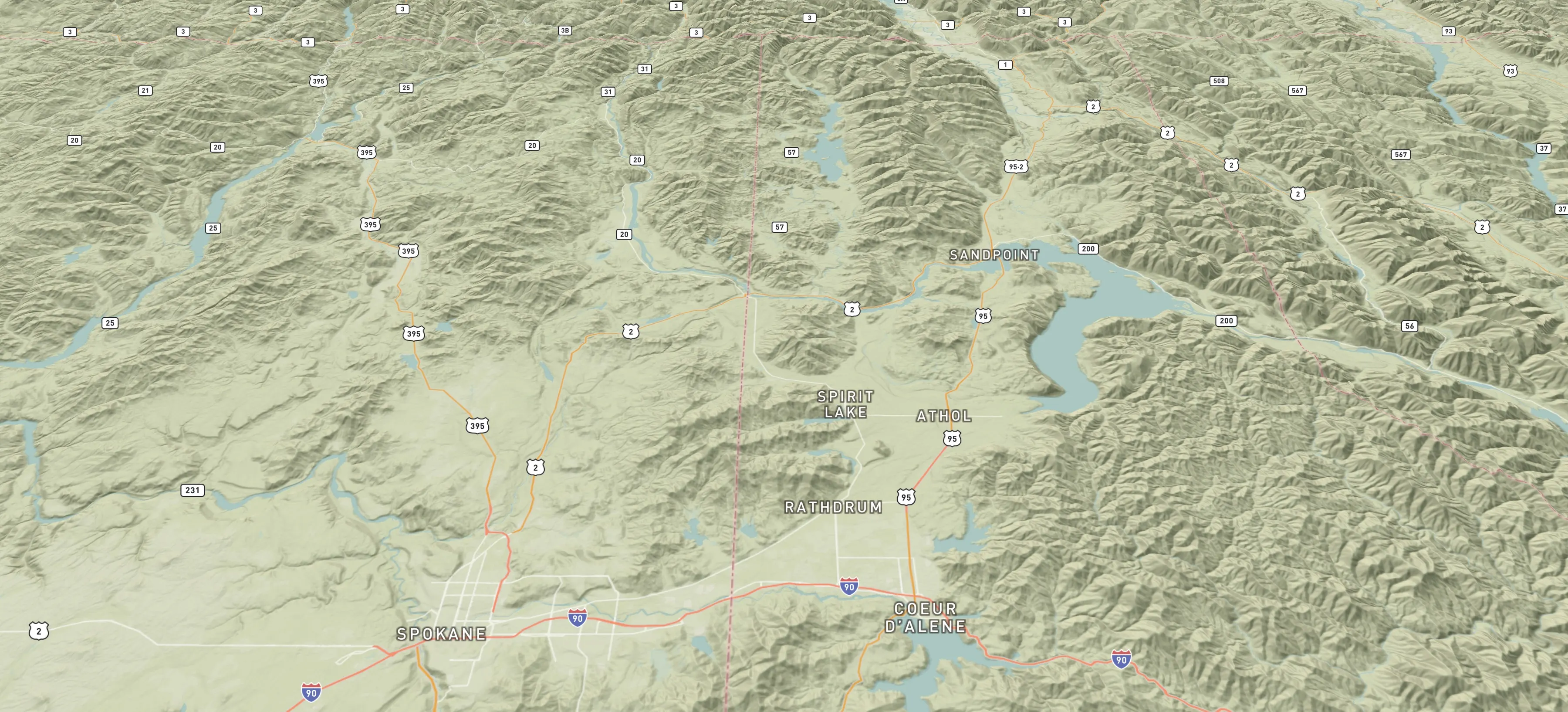
Terrain map of the Rathdrum Prairie between Spokane, Coeur d'Alene, and Sandpoint, the ground above the aquifer

What the well drinks from

The aquifer under the prairie.

The site sits over the Spokane Valley-Rathdrum Prairie aquifer, in ground the engineers describe as deep, extremely well-drained granular soils. That aquifer is the quiet reason the whole design works: one properly drilled, properly tested community well instead of fifty-eight separate gambles into the same water. The neighborhood drinks from the same source the cities down the highway do, through a system it owns.

Built to spec

The numbers off the stationing sheets.

These are construction figures from the approved sheets, not brochure adjectives.

Water main
5,478 ft
Main size
6 in PVC
Fire hydrants
5
Minimum bury
5 ft
Service to each lot
1 in
Testing standard
ISPWC

Those come off the stationing: 3,098 feet of main down Wandering Moose and 2,379 down Paddock, inside a 20-foot easement, with five hydrant assemblies on 6-inch gate valves and a 1-inch service stubbed to every lot. Chlorination, bacteria, and pressure testing to ISPWC standards happen before anyone connects, and the booster pump runs on three-phase power from Northern Lights, the same service the whole neighborhood gets.
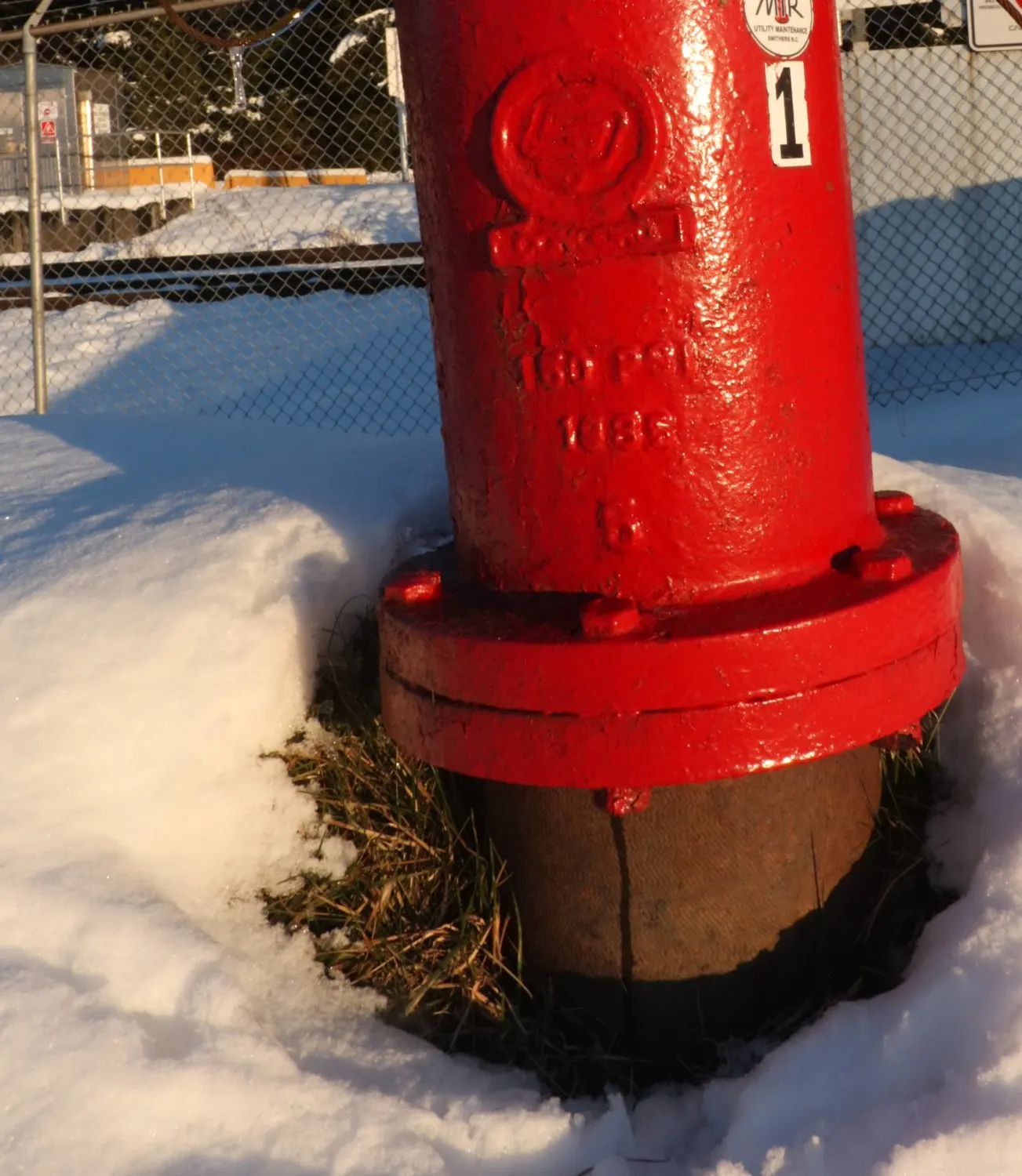
A red fire hydrant standing in deep snow, its pressure rating cast into the iron
Hydrants on the line. February does not care.

The other half

Your septic, your parcel.

Water is shared; wastewater is not. Every lot carries its own septic system, sized and sited with your builder and the county when you build. Six acres gives it all the room it needs, and it keeps your household's system entirely in your own hands.

The honest note

What is approved, exactly.

What exists on paper is the construction plan set, engineered by Olson Engineering and stamped by Lakes Highway District on February 3rd, 2026 with no exceptions taken. That is an engineering approval, and it covers the distribution system: the mains, the valves, the hydrants, the service to each lot. The well site itself is built under its own separate permit, which is the ordinary way a public water source gets approved, and that step is still ahead of us. The mains get laid and tested, the well gets drilled and permitted, and the water gets certified to ISPWC standards before a single home connects. When we say the unknown is answered, this page is what we mean by answered: a design a county reviewer signed without a single correction, and a set of numbers anyone can check.

The rest of the trench

The same open ground carries three-phase power and the neighborhood's own fiber. Water is the third leg of the same decision: put it in once, put it in right.

Come stand on the well lot.

Tract C is a short walk from the entrance. Come see where the neighborhood's water comes from.