The Kroetch family has been in North Idaho timber for a hundred years, and the real trick to timber, Joe will tell you, is that you are not taking from the land. You are harvesting sunlight, patiently, and leaving the place better than you found it.
That is the whole family trade. Borrow the sun. Leave the land better. So when the family set out to build a neighborhood, they did not want to stop doing that. They wanted to do the same thing, just in a new century.
Clagstone is fifty-eight legacy homesites of six acres, give or take, on three hundred and eighty-two platted acres. Twenty of those acres are shared open space woven through the middle to hold the ridge lines open and stitch the neighborhood together. The civil plat is stamped by a professional engineer at Olson Engineering. The covenants are written to hold the character of the ground for a hundred years, not five.
You do not really buy a lot here. You inherit a way of doing things.
The hundred years is not a round number. J.J. Kroetch built the family’s first mill at Harrison in 1921, back when Panhandle timberland sold for about a dollar an acre, and the company that grew from it still works forests in four counties. The region keeps its history the same way. Farragut, ten minutes east, trained two hundred ninety-three thousand sailors and kept its brig as a museum, and the pulaski hanging in every fire cache in America was forged one valley east in Wallace.
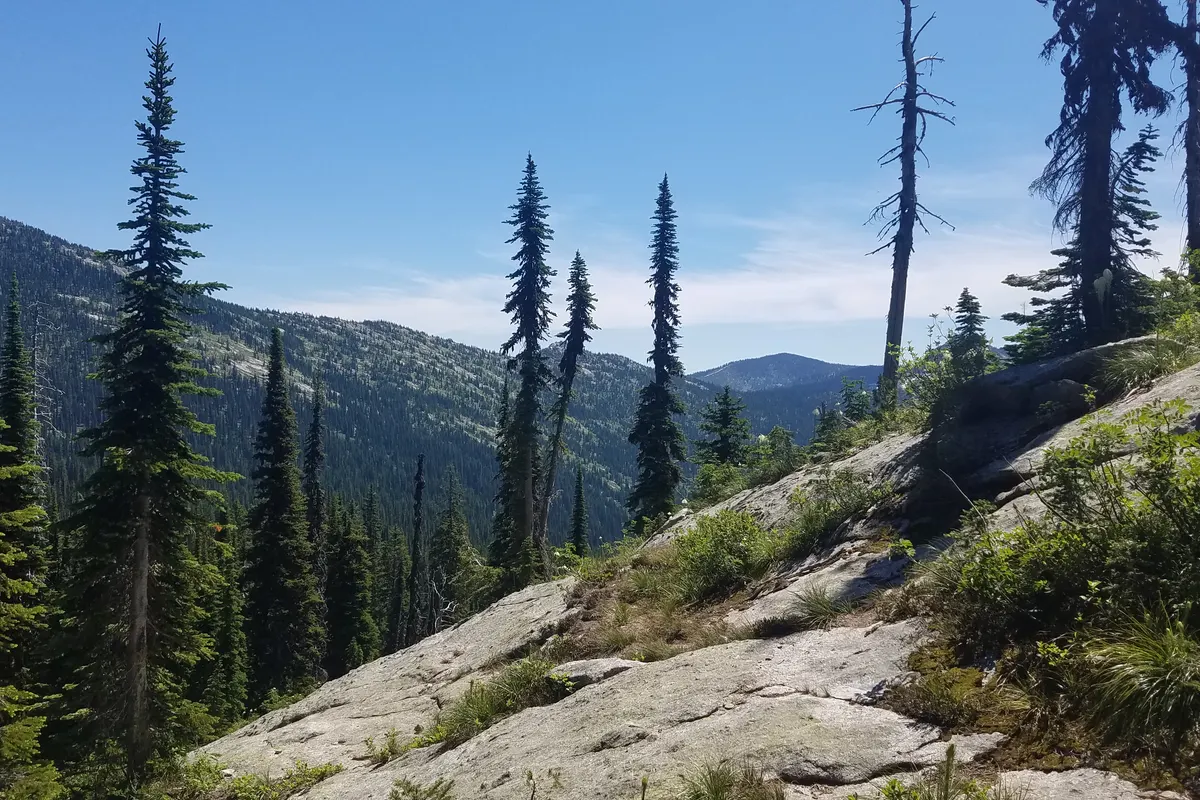
A hundred years is also a thing you can see on the ground, if you know where to look. The big pine that came off this country in J.J.’s day is mostly gone, cut in the white pine years when the Panhandle fed mills from Harrison to Post Falls. What stands now is the forest that came back, and the ridge lines the covenants hold open are the same ones he would have looked at from a landing. The larch still turn every October. The elk still come down the low draws when the weather pushes them. The 1910 fire that took three million acres in two days and burned a third of Wallace also cleared the ground that grew most of what you see, which is the sort of thing that only makes sense at a hundred-year scale.
That is the argument for buying this way. Anybody can sell you a view. The question is who is going to be responsible for it in 2060, and whether the paper says so. Here the paper says so: covenants written to hold the character of the ground for a hundred years, ridge lines protected, envelopes sited, and a developer whose family name has been on tax rolls in four counties since the first mill.
Bring your grandchildren. This is meant to still look like North Idaho when they are the ones walking it.
All of that sits on actual ground. See the fifty-eight on the plat →